Arthur Deakin
Director of Energy Practice
AMI
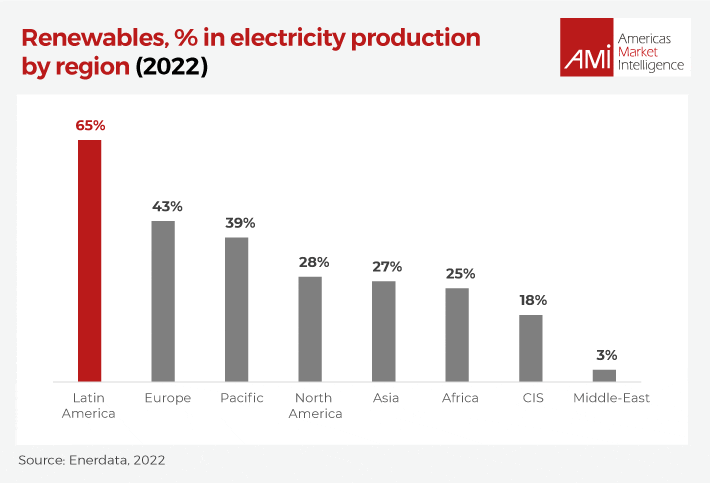
Latin America is a leading region in renewable energy production. Due the hydropower’s large presence in the region’s energy matrix, 65% of its energy came from renewable resources in 2022, compared to a global average of just 30%.1 Brazil remains a leading market in this respect, with 89% renewable penetration, just below Norway’s 98.5%. Among the largest markets in the region, Colombia and Chile are also in the top 10, with shares of 75% and 55%, respectively.
Between 2023 and 2028, Latin America will add 165 GW in net renewable capacity, a 100% increase compared to the previous five-year period.2
In 2022, 65% of energy in Latin America came from renewable resources, compared to a global average of just 30%
However, while renewables are prominent in Latin America, some sectors stand out more than others due to investments, government policies, natural conditions and ongoing expansions.
Here are the fastest-growing ones.
Solar Power
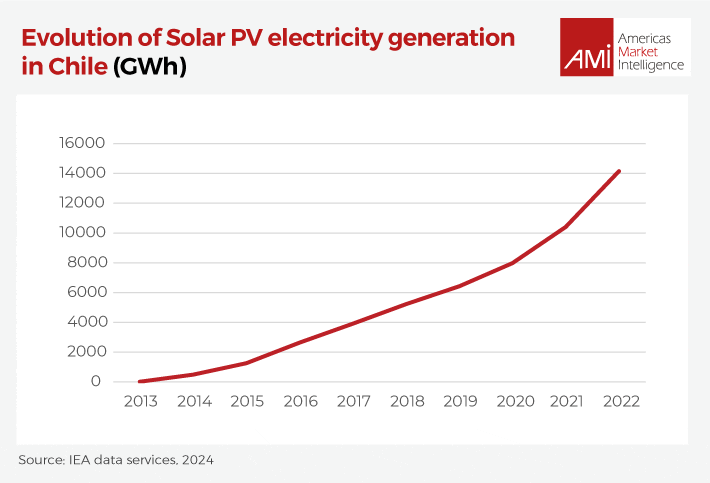
Latin America is one of the regions that receives the highest solar radiation in the world, making it a hub for solar energy and photovoltaic systems. The Atacama Desert in Chile has the highest global solar irradiation on Earth (2770 kWh/m2),3 which has attracted significant investment. An example is the Sonnedix Atacama project, started in 2019 and currently in phase III, with a production target of 4.2 GWh. More recently, in 2023, the Spanish energy company Grenergy announced the Oasis Atacama project, in which it will invest EUR 1.5 billion (US$ 1.6 billion) for the development of photovoltaic energy systems and EUR 800 million (US$ 857 million) for battery energy storage, aiming to become the largest storage project in the world.
Other Latin American markets will grow in this energy sector, including Colombia, Mexico, Argentina and Brazil. A recent renewable energy auction in Colombia awarded contracts to 30 new wind/solar energy projects. It is estimated that Colombia will increase its current net capacity from 506 MW to 6,696 MW by 2027, representing an increase in the market share for solar/wind energy from 3% to 26%.4
BMI estimates that solar energy generation’s market share across Latin America will increase from 6% in 2024 to 10% by 2033.5
Energy storage
Although much of the utility-scale energy storage developments have happened in Chile so far, the Dominican Republic and Puerto Rico are starting to install front-of-the-meter (FTM) storage projects to complement their solar assets.
Chile’s 1.3 GWh (337 MW) of FTM operational storage capacity makes it a clear regional leader, but AMI still expects the country to reach 10.2 GWh by 2026, a nearly 10x growth. These large estimates are a direct consequence of a recently announced capacity payment (roughly U$8/KW-month) that will be complemented by the 2nd highest energy spreads in the world (U$100+ MWh). This can lead to annual revenues in a range of US$6-8 million on a run-rate basis, or between $170,000 and 230,000 per MW.6 Since Behind-the-meter (BTM) BESS opportunities require no regulation, commercial and industrial clients in markets such as Mexico, Brazil and Colombia are also beginning to install these assets. Companies operating in countries with demand charges for peak consumption, hourly tariff rates, and high curtailment levels should install battery systems. It is an effective way to reduce emissions and cut costs, even if there is no clear BESS regulation yet.
Wind Power
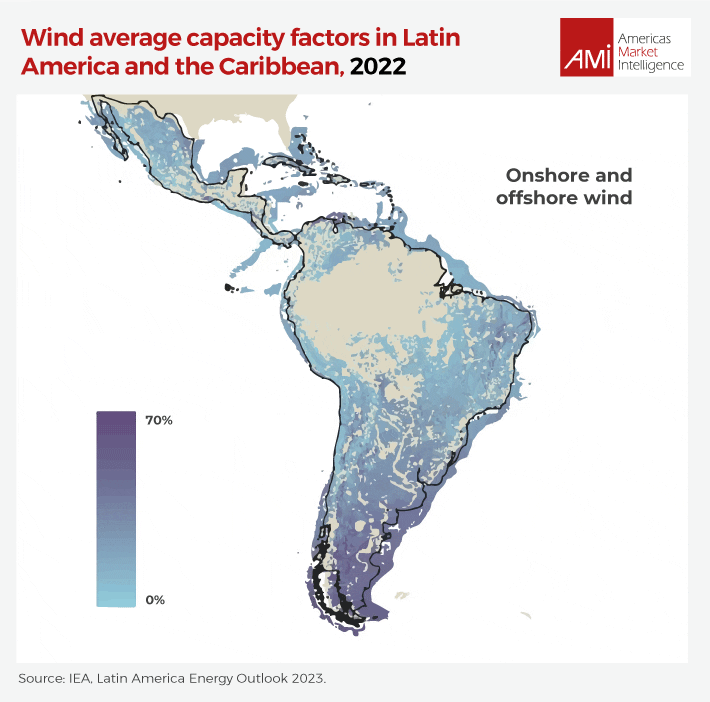
Wind power generation along with solar has strong potential in countries such as Chile, Bolivia, Brazil, Paraguay and Argentina (especially in Patagonia, one of the areas with the highest wind speed on Earth).7
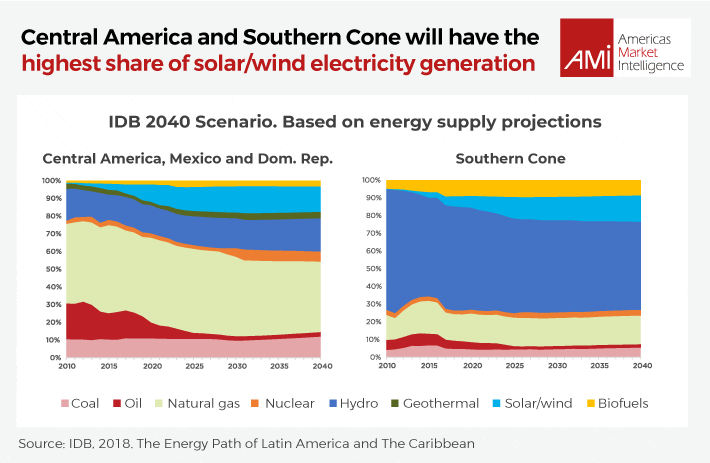
The potential for energy supply from solar and wind sources is such that, according to projections from the International Development Bank (IDB), in 2040, 11% of Latin America’s energy supply will come from non-conventional renewable resources, mostly solar and wind energy—a significant increase from the 2% share of these energy sources in 2014. The subregions with the highest shares will be Central America (including Mexico and the Dominican Republic) and the Southern Cone:8
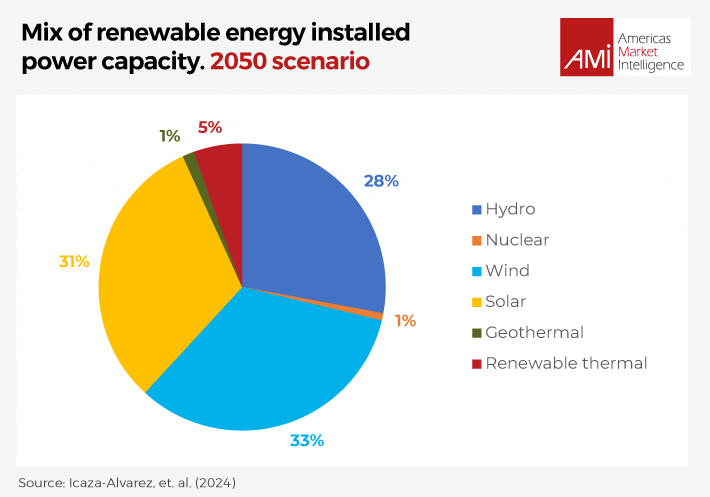
Another and more recent scenario, this one developed by Icaza-Alvarez et al. (2024) is way more optimistic. They forecast that by 2050 the renewable energy mix in Latin America will position wind energy as the leader in installed power capacity (with a share of 32.7% of power capacity from renewable resources) surpassing both hydropower and solar energy.9
Biofuels
Latin America is recognized for its production of biofuels, especially ethanol and biodiesel. Brazil, and more recently Colombia, stand out in ethanol production from sugarcane, while Argentina and Brazil are also leaders in producing and exporting soybeans, the main feedstock used for renewable diesel in the United States.10
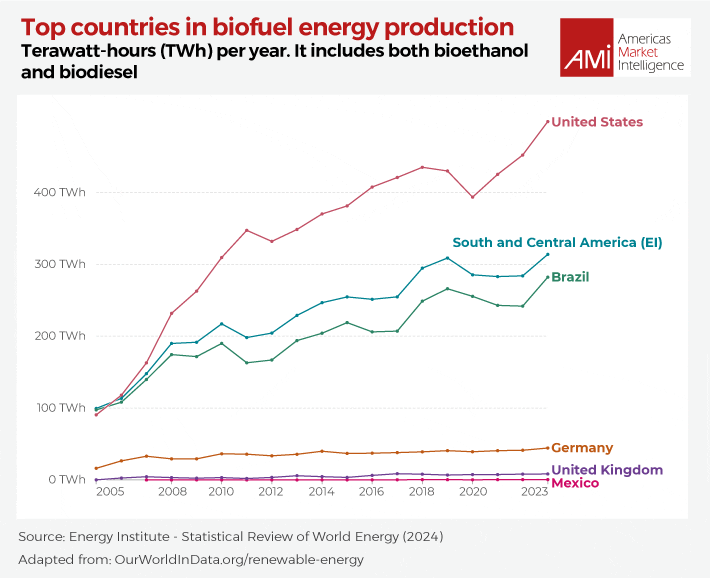
Brazil is an exceptional case, as it is considered the second largest producer of biofuels worldwide (measured as TWh per year) after the United States:11
Although the production of biodiesel and ethanol is significant in Latin America, it also has the feedstock to produce advanced biofuels such as Sustainable Aviation Fuel (SAF) and Renewable Diesel. In fact, AMI analysis shows that Latin America could produce 10% of the world’s demand for SAF by 2030.
Mexico, in particular, has a promising future as a key feedstock supplier. Local companies collecting used cooking oil (UCO) or rendering animal fats are well-positioned to benefit from the demand in the United States, Asia and Europe. Local demand for sustainable fuels might also become a factor under the Sheinbaum administration. AMI predicts a 50% chance that a biofuel law or mandate will be implemented. While we may expect resistance from Pemex, there are reasons to believe Sheinbaum will prevail:
- Sheinbaum is an electrical engineer by training, understanding the benefits of clean energy and sustainable fuels better than most politicians.
- It’s a strong personal interest for the president-elect. As mayor, she developed a used cooking oil (UCO) based biodiesel plant in Mexico City and published a 2013 paper on the “Potential of biodiesel from waste cooking oil in Mexico.” She also recently appointed the former finance chief of Mexico City to become the next Minister of Energy, someone who was a close ally to Sheinbaum during the UCO project.
- It’s a great investment opportunity. An estimated $50 billion per year will be invested in sustainable fuels through 2050, with Latin America expected to receive $6 billion (12%) of those investments.12
Finally, another promising biofuel for Latin America is renewable natural gas (RNG), which has shown early success in Brazil and is produced mostly from livestock manure and organic waste.13 Despite Mexico and Argentina’s history of traditional biogas production, the lack of regulation and remuneration for this fuel is delaying the adoption of RNG outside of Brazil.

Geothermal
Geothermal investment in Latin America could triple from U$570 million in 2024 to U$1.3 billion by 2027, according to Rystad Energy.14 Although it might slow down beyond 2030, there is an industry frenzy building around enhanced (or advanced) geothermal systems.
Geothermal investment in Latin America could triple by 2027, reaching US$1.3 billion from US$570 million in 2024, according to a Rystad Energy.
According to the report, Mexico has 51% of the installed geothermal capacity in 2024, driven by initiatives from the CFE (Comisión Federal de Electricidad in Spanish). Costa Rica follows with a 17% share.

Key geothermal projects in Latin America will include Cerro Pabellón (Chile), Laguna Colorada (Bolivia), and Tuzgle-Tocomar (Argentina). Geothermal projects might also leverage direct extraction of lithium due to their proximity to mining areas.15
Hydropower
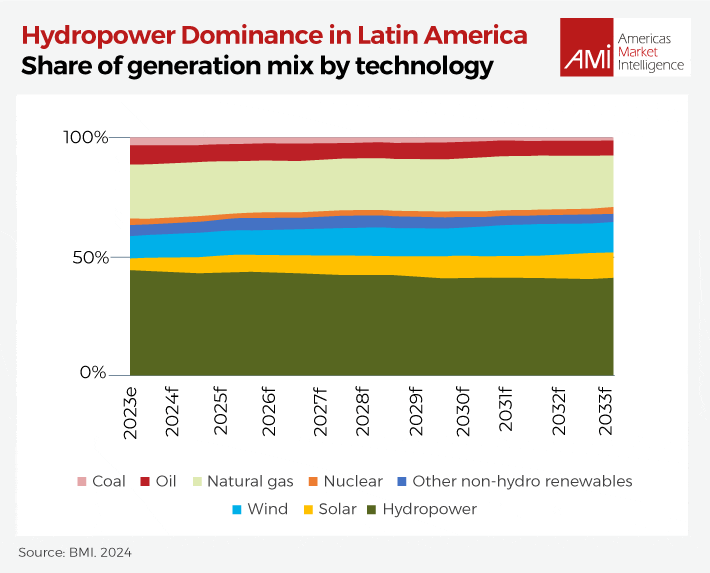
Hydropower is the primary renewable energy source in Latin America by a significant margin. According to BMI (2024),16 the share of hydropower in the energy mix ranges from a forecasted 99.7% in Paraguay to a 27.5% in Chile in 2024, and it makes up over 50% in seven Latin American markets.
However, it is important to note that the share of hydropower in energy generation may decline in 2024 due to weather conditions and increasingly difficult siting obstacles. As declared by BMI, “We expect further near-term disruptions to the region’s hydropower generation as the El Niño weather event is now expected to rapidly shift to La Niña conditions. […] Regional generation will fall to 764.3 TWh compared to 780.65 TWh in 2023.”
Despite this, the dominance of hydropower is expected to persist through the next decade:
Next Steps
Both large and small companies can capitalize on the region’s renewable potential, either by selling equipment to support the energy transition or by using renewable sources to meet net-zero targets. AMI and its 400 local subcontractors across the region can help companies in the following ways:
- Determining the best locations to build zero-carbon electricity in the region
- Sizing and forecasting the different equipment sold to utilities, IPPs, and others in the region
- Accessing renewable electricity supply for your company
- Partnering with the right IPP to support your company’s efforts in adopting renewable energy
Contact us to discuss your specific needs and tailor a study to meet them.
Sources:
- Enerdata, n. d. “Share of renewables in electricity production” ↩︎
- IEA (2024), Renewables 2023, analysis and forecast to 2028 ↩︎
- Icaza-Alvarez, D., Jurado, F., Tostado-Véliz, M. (2024). Smart energy planning for the decarbonization of Latin America and the Caribbean in 2050. In: Energy Reports 11, 6160–6185 ↩︎
- El Espectador (Feb 16, 2024). “Para 2027, el 26 % de la energía producida en Colombia sería solar y eólica” ↩︎
- BMI, 2024. “Americas Power & Renewables Insight — Latin America Region”. May 2024, ISSN: 2054-1449 ↩︎
- Energy Storage News, 2024. “IPP Innergex commissions second large-scale Chile BESS”. ↩︎
- Icaza-Alvarez, D., Jurado, F., Tostado-Véliz, M. (2024). Smart energy planning for the decarbonization of Latin America and the Caribbean in 2050. In: Energy Reports 11, 6160–6185 ↩︎
- IDB, 2018. The Energy Path of Latin America and The Caribbean ↩︎
- Icaza-Alvarez, D., Jurado, F., Tostado-Véliz, M. (2024). Smart energy planning for the decarbonization of Latin America and the Caribbean in 2050. In: Energy Reports 11, 6160–6185 ↩︎
- Rocha-Meneses L, Luna-delRisco M, González CA, Moncada SV, Moreno A, Sierra-Del Rio J, Castillo-Meza LE. An Overview of the Socio-Economic, Technological, and Environmental Opportunities and Challenges for Renewable Energy Generation from Residual Biomass: A Case Study of Biogas Production in Colombia. Energies. 2023; 16(16):5901. https://doi.org/10.3390/en16165901 ↩︎
- OurWorldInData.org/renewable-energy | 2024 ↩︎
- AMI Analysis ↩︎
- Rocha-Meneses L, Luna-delRisco M, González CA, Moncada SV, Moreno A, Sierra-Del Rio J, Castillo-Meza LE. An Overview of the Socio-Economic, Technological, and Environmental Opportunities and Challenges for Renewable Energy Generation from Residual Biomass: A Case Study of Biogas Production in Colombia. Energies. 2023; 16(16):5901. https://doi.org/10.3390/en16165901 ↩︎
- Rystad Energy (April 8, 2024). “Under the surface: Latin America sits on untapped geothermal potential; investments to hit $1.3 billion in 2027” ↩︎
- Rystad Energy (April 8, 2024). “Under the surface: Latin America sits on untapped geothermal potential; investments to hit $1.3 billion in 2027” ↩︎
- BMI, 2024. “Americas Power & Renewables Insight — Latin America Region”. May 2024, ISSN: 2054-1449 ↩︎
Keep up to date with our Energy insights