


Sulivan Rocha
Sr. Analyst
AMI

Diego Rodríguez Paez
Director of Logistics and Industry Practice
AMI
The logistics industry plays a fundamental role in Brazil’s economy, facilitating the movement of goods over long distances and supporting various sectors and industries. However, the Brazilian logistics scenario has developed in a counterintuitive way, with companies often setting up logistics and manufacturing operations through routes and States that are not the shortest when it comes to transportation or warehousing, but rather based on receiving tax benefits of some kind.
Under this tax scenario, Brazilian industries have prioritized the tax benefits of certain cities and states without considering the additional costs and distances they would have to travel to operate in. Logistics operations have traditionally been developed not on the basis of logistical efficiency, but rather logistical-tax efficiency.
After decades of trying to approve a Tax Reform, the government finally approved a reform in December 2023 which still doesn’t have all the details defined, but which will certainly have a major impact on the Brazilian tax scenario. This is expected to reduce the complexity that has such an effect on the way companies operate and on their logistics operations, forcing companies to re-evaluate their entire production chains to seek the greatest efficiency in a scenario that will continue to change for years – the transition period from the current rules to the new rules set by the reform will run from 2026 to 2033.
The fiscal war between Brazilian states
One of the main impacts of the reform on tax collection will be the shift from production to consumption. In other words, once implemented, it won’t matter in which state the goods were produced, but in which state they are consumed. Thus, the traditional and long-lasting Fiscal War between Brazilian states, which fought for decades to try to attract companies and factories to their states to increase their municipal and state revenues, will come to an end. With the laws before the reform, the states fought each other to attract investment through very specific tax benefits, which will no longer be viable after the reform is implemented.
The traditional and long-lasting Fiscal War between Brazilian states, which fought for decades to try to attract companies and factories to their states to increase their municipal and state revenues, will come to an end.
Probably the main example that symbolizes this tax war is the municipality of Extrema, in the state of Minas Gerais. Despite being in another state, the municipality is 100km from the city of São Paulo, the country’s largest consumer center. The Minas Gerais state government has offered various benefits and tax incentives to attract companies to this municipality over the last few decades, including providing free land for the construction of warehouses, stimulating the region’s economy, and collecting more taxes. The result is that today several companies operate in Extrema, but often they don’t produce anything in the city: the goods are produced elsewhere, transported to their own Distribution Center in Extrema, and then sold. By issuing invoices for products leaving the Extrema Distribution Center (and not from factories elsewhere), companies can take advantage of the tax benefits they enjoy from the municipality of Extrema and the state of Minas Gerais. Even with the increased logistical costs of moving these goods from where they are manufactured to the distribution center, or even sending them to a city that is not on the route of their main consumer markets (depending on the product), companies continue to do this because when they evaluate the tax benefit and the costs of this movement, it ends up being worth it.
According to Bernardo Appy, Extraordinary Secretary for the Tax Reform, “All states give tax benefits. From the poorest to the richest in the country, they are often stealing a company from the neighboring state and the neighboring state is stealing a company from them. The effect is that nobody is gaining from this process”.
Implications for national logistics
This transition is expected to be extremely troubling as the complementary laws that will be applied in the Reform will only begin to be discussed in Congress in the second half of 2024 and will be subject to various lobbying interests. As the Reform will have major implications, it is expected that several industries will request exception cases and requests for postponement, making the regulation of the Reform very difficult and time-consuming.
In any case, the Reform has been enacted, so it will be regulated and put into practice one way or another. As a result, companies need to start closely assessing the implications for their operations and start re-evaluating their logistics operations so as not to commit to contracts and logistics flows that will be far from ideal in the future. For example, signing long-term leasing contracts based solely on tax benefits may not be ideal, given that changes will take place over the next few years.
It is also notable that simplifying the Brazilian tax system will have a positive impact on national GDP growth, boosting the economy and bringing greater demand for products, benefiting all sectors of the economy, including the logistics sector. As well as making the country more attractive to investment, the impact of simplifying the national logistics network, bringing distribution centers closer to consumption centers, will have a positive impact on reducing the carbon footprint in the country, with trucking transportation the most widely used mode in the country.
ami WEBINAR
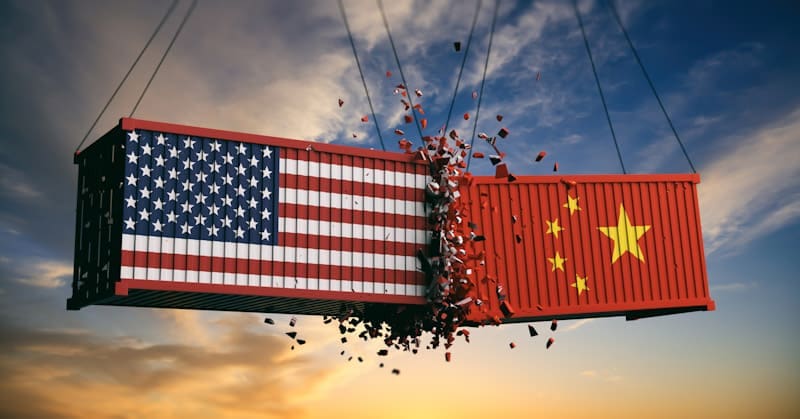
China vs. USA: The Battle for Latin America in Trade and Logistics
AMI teamed up with JAS to host a fascinating discussion
Sources:
X Tax Group (May 5, 2024). “Quando entra em vigor a Reforma Tributária? Entenda“
Valor Econômico (March 28, 2024). “Reforma pode redefinir rotas“
G1. (December 22, 2023). “Reforma tributária vai mudar a forma como os impostos são arrecadados no Brasil“
Fusion S/A., n. d. “Reforma tributária: Impactos para a logística brasileira”
Sempre Negócios. “Extrema MG voa alta ancorada por proximidade com São Paulo e incentivos fiscais“
BNews. (June 10, 2024). “‘A Reforma Tributária tem o potencial de acabar com a Guerra Fiscal’, diz superintendente da FIEB”
Keep up to date with our Logistics insights


